Storm Season Tree Trimming in Greenville, MS
Use the homepage contact form to request a quote.
Washington County's storm season runs from April through October. Severe thunderstorms, squall lines, and straight-line wind events move across the flat Delta with little terrain to break them up. Trees in Greenville and the surrounding county take a direct hit when these systems move through, and the ones that weren't trimmed going in are the ones that drop limbs on roofs on the way out.
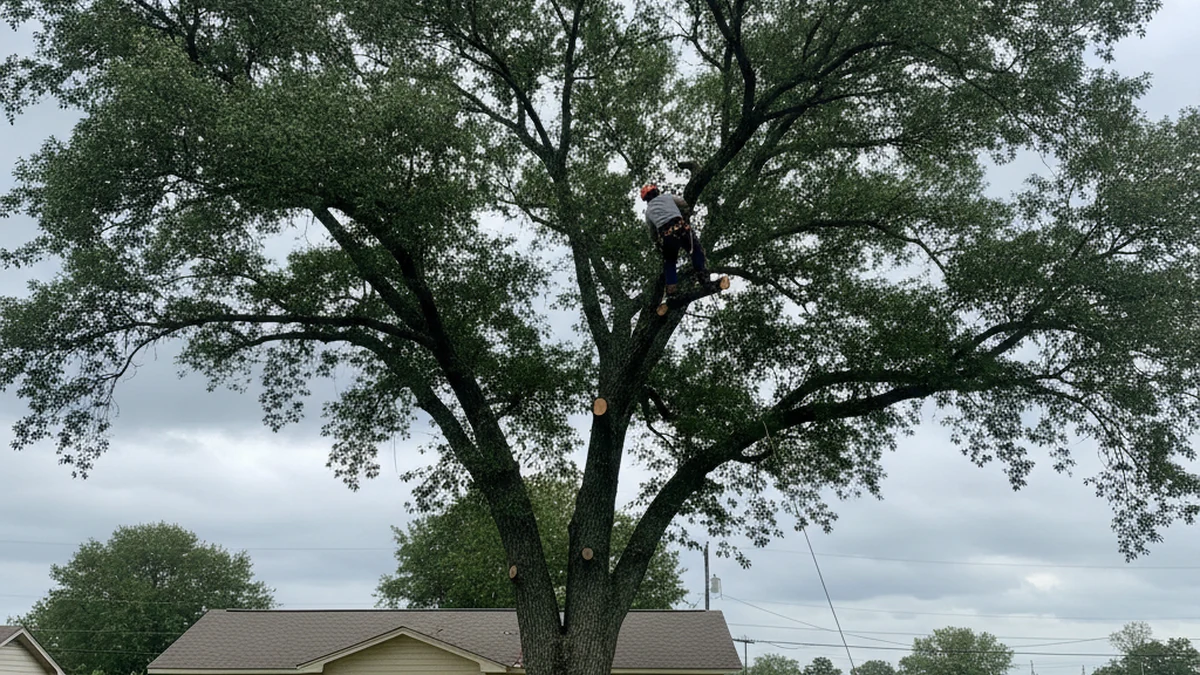
Darnell trims trees before storm season - not after. The work is faster, cleaner, and cheaper when there's no storm damage to deal with alongside it.
What Delta Storm Season Does to Trees
The Mississippi Delta's flat terrain means there's nothing between a severe storm system moving off the Arkansas side and the properties in Washington County. The storms that hit Greenville in April and May are the same systems that have been tracking across flat ground for 50 miles - nothing has slowed them down.
Water oak in particular is a storm season liability. It develops internal deadwood that isn't visible from the outside and drops large sections of crown in high wind without the slow lean and tipping that other species show. A water oak that looked fine in March has left limbs on roofs in June. Darnell has seen it repeatedly.
Overhanging limbs and crowded crown structure are the specific targets in pre-storm trimming. Taking weight and surface area out of the crown before the wind season reduces both the force the tree experiences and the consequences if a branch does fail.
Pre-Storm Season Timing
The practical window for pre-storm trimming in Washington County is February through March - before the worst of the storm season and before trees break dormancy and become more vulnerable to trimming stress. Request an estimate to confirm current scheduling.
What Pre-Storm Trimming Covers
Deadwood removal. Every dead branch in the crown is a projectile in a severe wind event. Darnell removes deadwood to the branch collar - proper cut points, not stub cuts that decay into the main trunk.
Crown-over-structure clearing. Branches that reach rooflines, power service drops, carports, and fences get cut back to a safe clearance. Trim now or remove debris after - the work gets done either way.
Weight reduction on overextended limbs. Water oak and pecan in particular develop long scaffold limbs with heavy end weight. Crown thinning and weight reduction cuts reduce the lever effect that snaps limbs in high wind.
Elevation of low canopy. Branches that hang low over driveways and walkways get lifted to a safe clearance so vehicles and foot traffic aren't in the fall zone for minor failures.
Pricing for Storm Season Trimming
- Per tree: $150–$500 depending on size, species, and scope
- Water oak or pecan (mature tree): $200–$400
- Multi-tree properties: request an estimate for combined scope quote
Free estimates - request an estimate Request a Free Estimate.
Storm Trimming FAQs
When is the best time to trim trees in Greenville before storm season?
February and March, before the worst storm risk arrives in April and before trees break spring dormancy. Request an estimate to confirm current pre-storm trimming availability.
Can trimming actually prevent storm damage?
It significantly reduces it. Trimming doesn't make a tree storm-proof - nothing does. But removing deadwood, clearing overhanging limbs, and reducing crown weight substantially reduces the risk of damage from the kind of wind events Washington County gets every spring. The trees that survive Delta storms cleanest are the ones that were trimmed going in.
**What if I miss the pre-season window
- is mid-season trimming still worth it?**
Yes, with caveats. Active storm season trimming is possible but Darnell won't trim in wind or before an incoming system. On calm days between storm events, trimming overhanging limbs that are a clear liability is still worth doing. It's just less ideal than doing it in February.